Late Freight is built on a simple bet: that planning and running a real delivery day, with its deadlines, its buildings and its people, is more interesting than it sounds. Before building anything big, we built one day to test it.
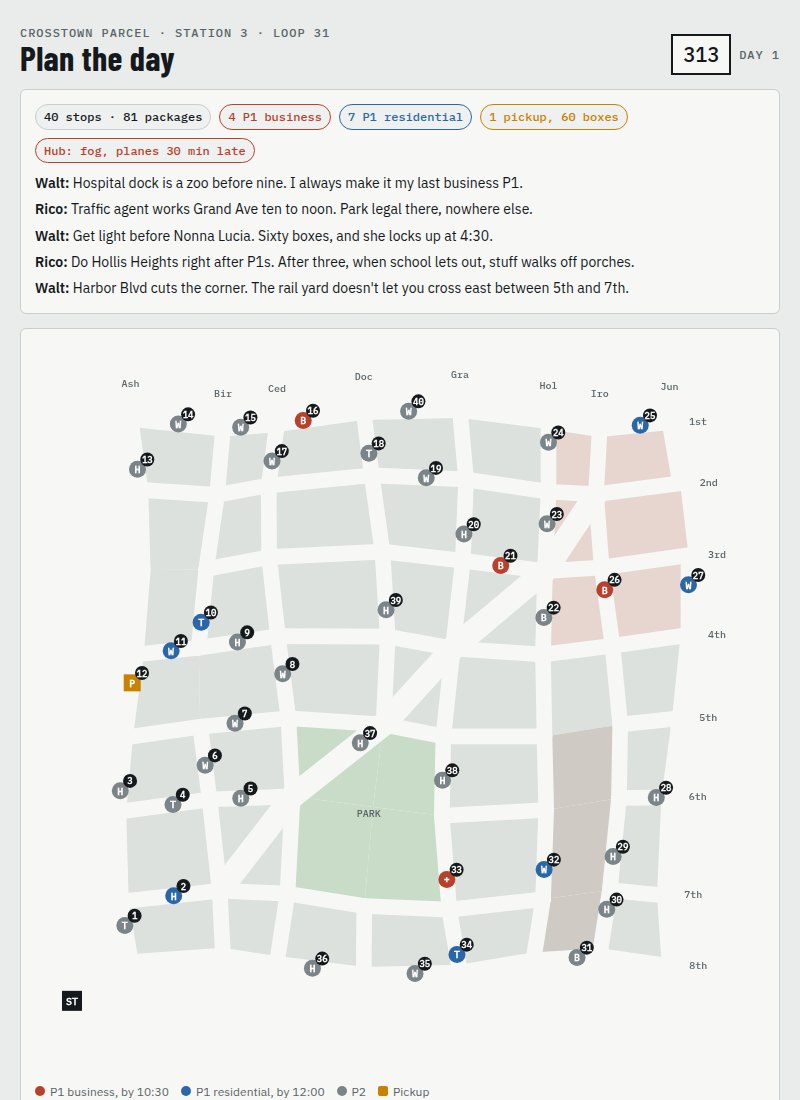
Streets, not a grid
The first version was a clean grid, and it felt fake immediately. Real neighborhoods have diagonal avenues, a park you can't drive through, a rail yard that cuts the map in half. The moment the streets got messy, planning got interesting.
The rules you learn, and the ones you don't
Some stops have hard deadlines: business priorities by 10:30, residential by noon. Some buildings eat ten minutes in an elevator. Some blocks you want to finish before school lets out. The handbook tells you the first kind of rule. Your coworkers tell you the second kind, one line of advice at a time before you leave the station.
When the day pushes back
Once you roll out, the plan meets the street. Nobody's home. Parking is impossible. A block gets closed and you have to come back later. Every one of those is a choice, and every choice shows up at the end of the day, in the numbers and in how your crew sees you.
The prototype answered the question: yes, a route can be a game. Now we build the rest of it.