Every Dominican family has the same table. Folding legs, a board or a cloth on top, four chairs, somebody's uncle keeping score on whatever paper is closest. The game is loud, fast and personal. Mesa had to feel like that table before it felt like a video game.
Start from the table
The first decision was the color of the felt. Not casino green, which is bright and cold, but a deep, worn green, the color a table goes after years of slapped tiles and spilled drinks. Everything else sits on top of it: ivory tiles, black pips, and a wood rail around the edge.
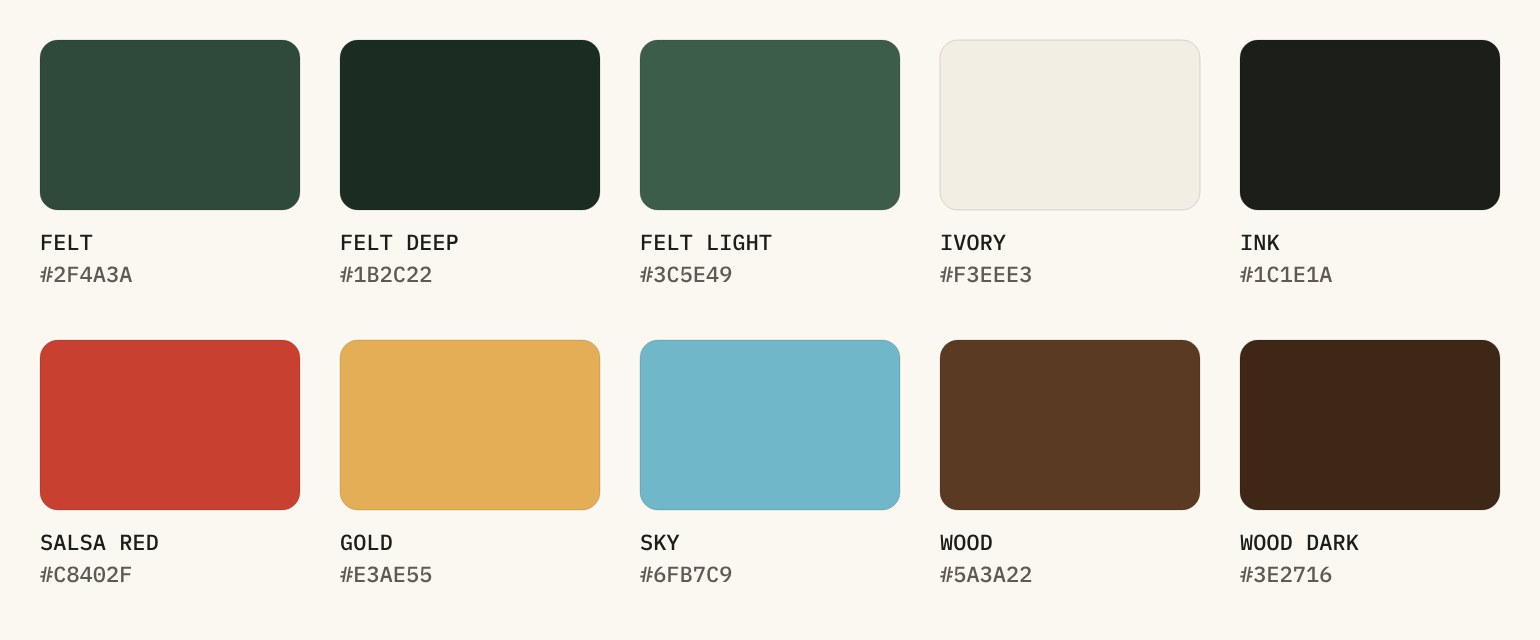
A logo that slaps the table
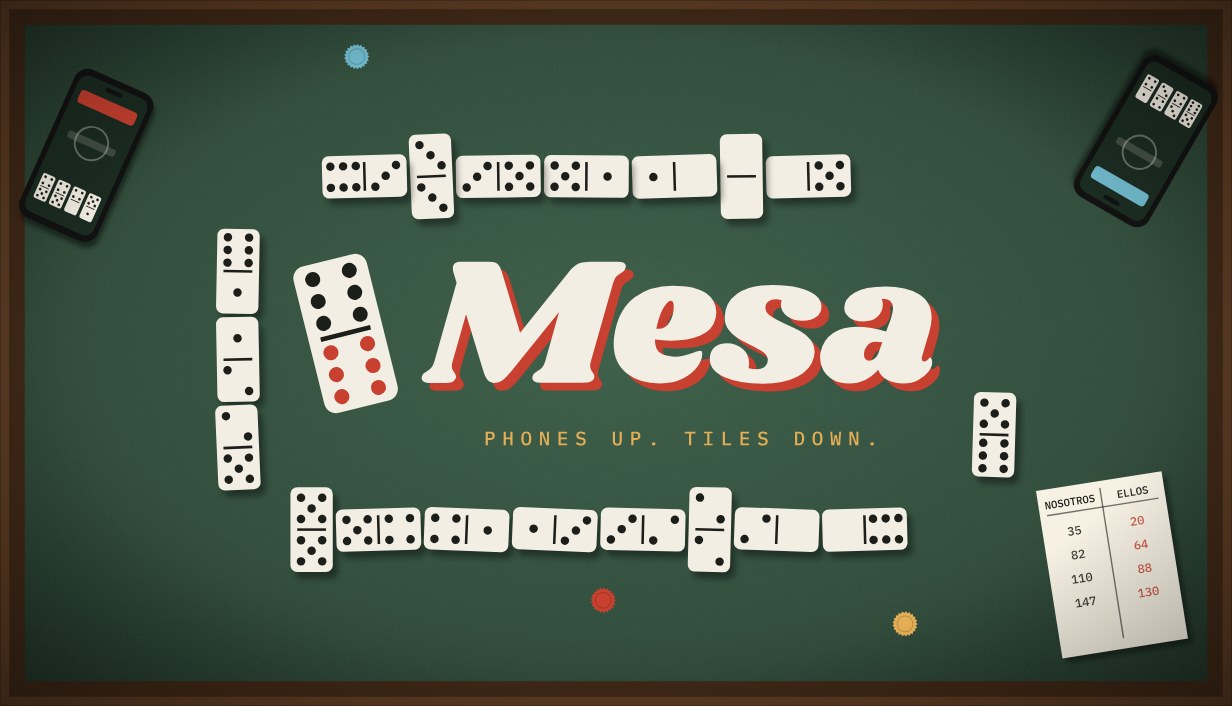
The wordmark is set in a heavy, round script with a hard red shadow knocked out behind it. It's loud on purpose. Next to it sits a double-six with red pips on the bottom half, tilted like it just got played. That red shadow became the whole system: buttons press down into it, big moments like a capicú land with it.
The tagline came last and stayed: Phones up. Tiles down. Your phone is your hand, the TV is the table, and everyone in the room is watching.
The details only players will catch
In our store art, the dominoes snaking around the logo follow the real rules. Every end matches the tile it touches, doubles sit crossways, and no tile appears twice. The score pad in the corner reads Nosotros and Ellos, because that's how the score gets kept.
Nobody will write a review about whether the double-three was placed correctly. But the people who grew up at that table will feel it, and they're who Mesa is for.